
Most parents do not think about police, paramedics, or outreach teams until something has already gone wrong.
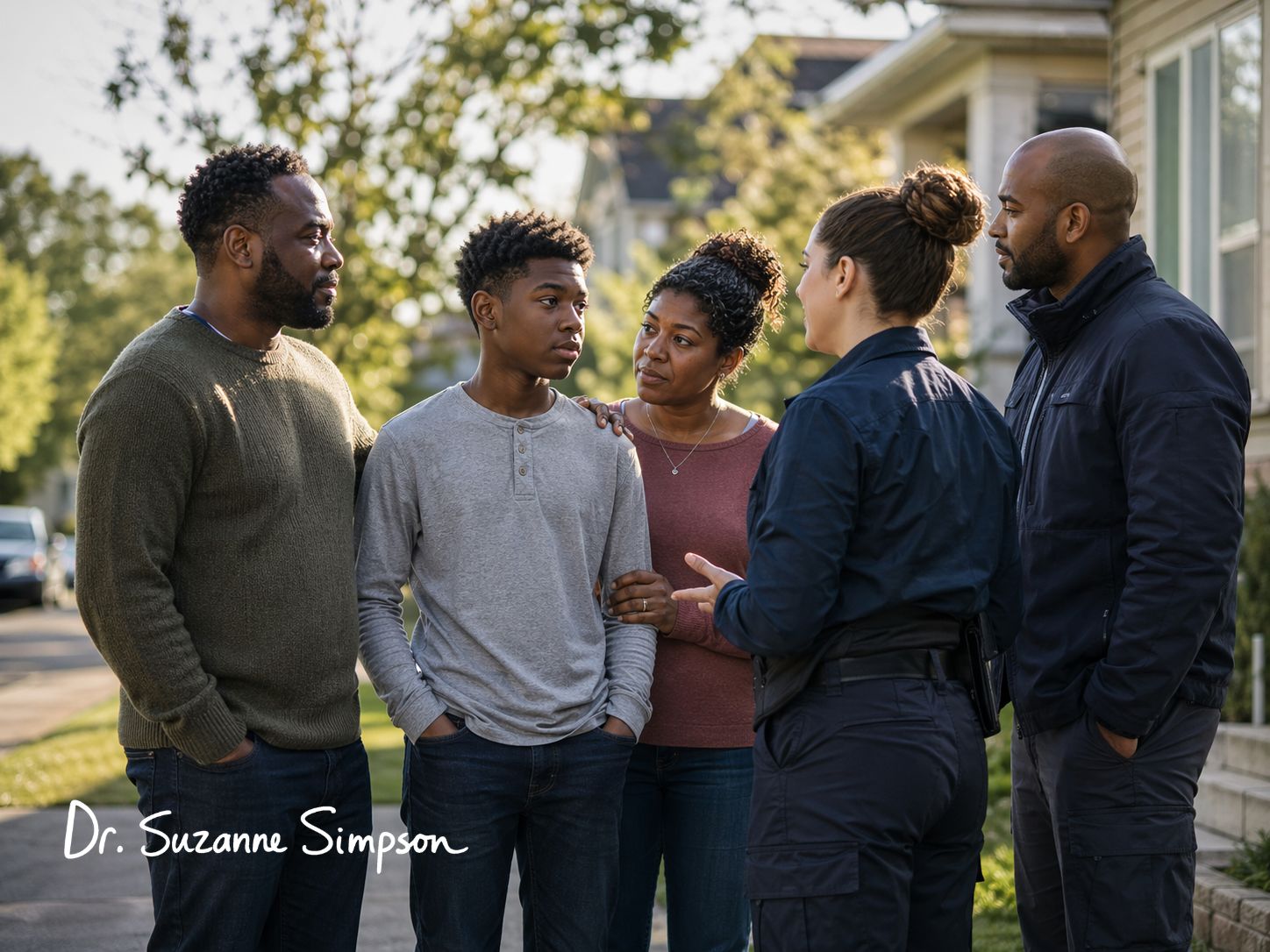
A call from the school. A welfare check. A neighbour concerned. A teen in distress in a public place. Suddenly there are uniforms in your driveway, and your heart is in your throat.
If you have ever been in that moment, or you worry you might be one day, I want to offer a different frame.
Frontline workers can be partners in teen safety and youth mental health, not just responders in emergencies. Your job as a parent is to keep connection at the centre, reduce fear, and help your teen understand: your worth does not disappear when you are struggling.
Why Uniforms Hit Teens Differently Than Adults Expect
When a teen interacts with an officer, paramedic, or outreach worker, they may feel several things at once: fear (“Am I in trouble?”), shame (“Everyone will think I’m bad”), relief (“Finally someone is taking this seriously”), confusion (“What is happening and what do I say?”), and loss of control (“People are deciding things about me”).
Even a calm interaction can feel intense to a teen nervous system. If your teen has anxiety, a trauma history, or previous negative experiences with authority, the intensity can multiply.
This is why your steadiness matters. Teens do not need you to be perfect. They need you to be present.
Prepare Before the Crisis, Not After
If we wait until a crisis, everyone is already flooded. Preparing earlier gives your teen a sense of agency, and it lowers the fear factor if an interaction ever happens at school, in the community, or during a mental health crisis.
Preparation is not a scare talk. It is a values talk: safety, respect, and rights, plus the reminder that your teen’s worth stays intact no matter what.
Try introducing it in a neutral moment, like a car ride: “Sometimes police, paramedics, or outreach teams show up when someone is worried about safety. It doesn’t automatically mean you’re in trouble. I want you to know what to do so you feel steady if it ever happens.”
Then keep it short. Let questions come later.
Scripts You Can Give Your Teen
“You are allowed to slow it down.” If you ever have to talk to an officer or paramedic, you can take a breath. You can say: “I’m feeling overwhelmed. Can you explain what’s happening?”
“You can ask for a trusted adult.” You can say: “I want my parent or another trusted adult here.” If you are being questioned, you can also ask to speak to a lawyer before answering. In Canada, youth have specific rights in these situations, and asking for support is not a sign of guilt.
“Your worth is not on trial.” No matter what is happening, you deserve respect. You can be struggling and still be treated with dignity. I will be on your side.
That last piece is often the most powerful. Teens are terrified of being labelled. You are reminding them they are still human, still valued, still yours.
A Simple In-Case Plan to Make Together
Identify safe people. If I’m not there, who at school feels safe to you? Is there a counsellor, teacher, or coach you trust?
Choose one calming tool. Not a whole toolkit: one thing they will actually do. Slow exhale breathing, holding something cold like a water bottle, or a grounding phrase: “I’m safe right now.”
Agree on one sentence they can use if they freeze. “I’m overwhelmed. I need you to speak slowly.” “I want to call my parent.” “I need a minute.”
Decide what information is helpful to share. If your teen has panic attacks or sensory sensitivities, a brief heads-up can help frontline workers support them more effectively. “Loud voices make me shut down.” “I respond better if you explain steps first.”
If Your Teen Shows You Something Worrying About an Interaction
Sometimes teens come home angry after contact with a school officer, a wellness check, or a community incident. Your first job is not to judge the frontline worker, or defend them, or blame your teen.
Your first job is to create safety so your teen can process.
Try: “That sounds intense. I’m really glad you told me.” “What part felt scary or unfair?” “What do you wish the adults understood about you in that moment?”
Then: “Do you want comfort, or do you want help taking next steps?”
The Most Important Message Your Teen Needs
If your teen ever has an interaction with police, paramedics, or outreach teams, the goal is not to turn them into a perfect speaker in a stressful moment. The goal is to help them feel anchored.
“Adults in uniforms may feel intense, but you are not alone.”
“We can ask for help and still keep your dignity.”
“You deserve support, understanding, and care, especially on hard days.”
That is how you reduce fear while increasing safety.
Visit drsuzannesimpson.com for more tools to help your teen feel safe in the world.
Disclaimer: The contents of this blog are for educational purposes only and are not a substitute for professional advice, diagnosis, or treatment. My scope of practice is as an educator. Testimonials of lived experiences are opinion only and have not been scientifically evaluated.
Walking with you to get on their turf, Dr. Suzanne Simpson