
Relationship as the Foundation
Connection Saves Lives
Connection saves lives
Connection is not separate from influence — it IS influence. You cannot guide, teach, or lead someone who does not trust you. When you get on their turf first, everything else becomes possible.
Dr. Suzanne Simpson
QUICK ANSWER
Connection saves lives means that a steady, trusting relationship with at least one adult is one of the strongest protections a young person can have. When I asked 25 teenagers in psychiatric care what they needed, they named support, understanding, and care from adults, not more programs. Building trust with teens is not a technique. It is a relationship you build over time, one ordinary moment at a time.
I spent nearly six years teaching inside a youth psychiatric unit. For my doctoral research at Simon Fraser University, I sat with 25 teenagers there and asked what they needed from the adults in their lives. I half expected them to name a program, a strategy, or a type of therapy.
They named people.
Adults who noticed. Adults who listened instead of fixing. Adults who kept showing up, even when the young person pushed them away. Again and again, what made the difference was a relationship with someone who stayed.
That is what this page is about. Whether you are a parent or an educator, the relationship you build with a young person is not a nice extra. It is the foundation that everything else stands on: your influence, their trust, and sometimes their safety.
What Does “Connection Saves Lives” Mean?
Connection saves lives is the core idea behind Get on Their Turf. It means that a young person who feels seen, valued, and understood by at least one trusted adult is better protected against the things that can overwhelm them: anxiety, depression, substance use, and thoughts of suicide.
This is not a slogan. The Centers for Disease Control and Prevention (CDC) names connectedness to family, school, and caring adults as a protective factor against youth suicide. Research on mattering points the same way. Dr. Gordon Flett, a psychologist at York University and a leading researcher on mattering, found that 35 per cent of children feel they do not matter, while only 8 per cent of parents believe their child could feel that way.
That gap is where connection does its work. Most adults care deeply. But caring about a young person is not the same as that young person feeling cared for. Connection is what closes the gap. Attachment theory has shown the same thing for decades: young people do better when they have a secure base, an adult they can return to when life gets hard. The teenage years do not end that need. They test it.
Connection also shapes everything else. You can’t influence a child you don’t connect with. A teenager who does not trust you will not take your advice, respect your limits, or tell you when something is wrong. A student who does not feel safe with you will not take risks in your classroom. When the relationship is strong, guidance becomes possible. When it is weak, even the best advice bounces off.
What 25 Teenagers in Crisis Said They Needed From Adults
The young people in my research came from different backgrounds, carried different diagnoses, and were at different ages. But when they described the adults who had helped them, the same three things kept coming up: support, understanding, and care.
They did not experience these as separate. In their stories, there was no caring teacher who offered no support, and no understanding adult who did not seem to care. They needed all three together, from the same person.
What they did not name was programs. When I asked which programs had helped them feel good about themselves, the answers were sparse. Only 12 per cent named anything structured at all. I am not saying programs have no place. I am saying they cannot replace a person.
The research also brought out eight heart-desires, the things these young people longed for from adults: healing, safe spaces, to be looked at, to be pursued, to be listened to, for adults to know them, to succeed, and for adults to try. Almost every one of them is about a relationship.
Underneath it all was one question they rarely said out loud: Am I safe with you? What looks like defiance is often pain. What sounds like disrespect is often fear. Connection is how an adult answers that question with a yes.
I talk about what these teenagers taught me in the podcast episode on lessons from teens in psychiatric care, and about what young people in crisis need from the adults around them in another episode.
How to Build Trust With Teens: Get on Their Turf
Building trust with teens does not happen in one big conversation. It happens in small, ordinary moments, repeated over time. Getting on their turf means meeting young people where they are, emotionally, physically, and relationally, instead of waiting for them to come to you.
Here is what that looks like in practice.
- Go first. The young people in my research wanted to be pursued. They wanted the adult to take the first step, and to keep taking it: the check-in, the follow-up, the question asked before things get bad.
- Join their world. Spend time on what they care about: their game, their show, their music, their sport. Some of the best conversations happen side by side, in the car or on a walk, not face to face across a table.
- Listen more than you talk. Most adults hear young people. Far fewer actually listen. Pause before you respond. Ask “What’s up?” with real curiosity, and let them lead.
- Stay when it gets hard. Sometimes you’re just the emotional punching bag. Not because they hate you, but because you’re safe. Staying present through anger or silence tells a young person the relationship can hold.
- Own your part and repair. You will get it wrong. Everyone does. Taking responsibility for your side of a conflict, without blame and without excuses, shows a young person what accountability looks like. It rebuilds trust faster than any lecture.
None of this needs perfect words. You don’t need perfect words. You need to show up.
If your teenager has gone quiet, how to help your teen open up is a good place to start. And for the moments when you feel your temper rising, three questions that change what happens next in a conflict will help you respond instead of react.
Clinical counsellor Andrew Neufeld describes research showing that simply having someone you trust in the room can change how the body experiences pain. Hear Andrew Neufeld’s conversation on connection and teen mental health for the full story.
Where to Start: Parents and Educators
For Parents
If you are a parent, you may feel like your teenager has shut you out. Maybe every conversation turns into an argument, or they have stopped talking to you almost completely. That is where this work begins, not where it ends.
Start with the complete parent guide to getting on your teen’s turf. From there, read what getting on their turf actually means for a parent, and then the three things teenagers need most from their parents. Each one builds on the last.
You can also download my free guide, 8 Ways to Get on Your Kids’ Turf, and join the Getting on Their Turf newsletter for research-based ideas you can use at home.

Read more »
If you teach, counsel, or lead in a school, you already know that the students who need you
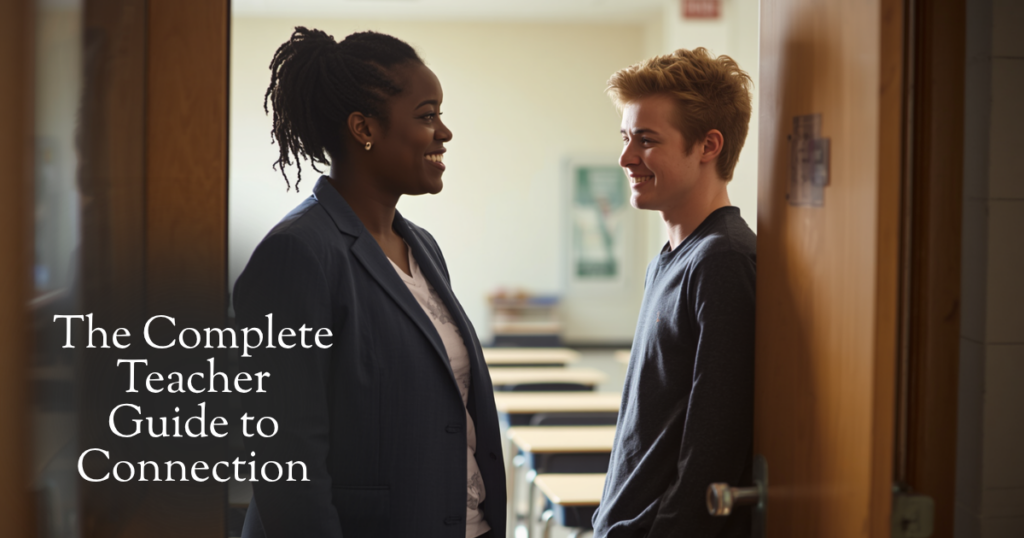
most are often the hardest to reach. Research on resilience keeps finding that one caring adult at school can change a young person’s path. That adult does not have to be a counsellor. It can be you.
Start with the educator guide to building strong teacher-student relationships. Then read what getting on their turf looks like in a classroom, and how support, understanding, and care show up for students at school.
Relationship-first teaching is also at the heart of trauma-informed education. Safe, predictable relationships come before learning, not after it. I bring this work to schools through keynotes and professional development workshops, including:
- Get On Their Turf: What Student Behaviour Is Really Saying
- Your Calm Is the Intervention: Teacher Self-Regulation in Crisis
- Connection Saves Lives: Building Trust With Hard-to-Reach Students
For Educators
If you teach, counsel, or lead in a school, you already know that the students who need you
most are often the hardest to reach. Research on resilience keeps finding that one caring adult at school can change a young person’s path. That adult does not have to be a counsellor. It can be you.
Start with the educator guide to building strong teacher-student relationships. Then read what getting on their turf looks like in a classroom, and how support, understanding, and care show up for students at school.
Relationship-first teaching is also at the heart of trauma-informed education. Safe, predictable relationships come before learning, not after it. I bring this work to schools through keynotes and professional development workshops, including:
- Get On Their Turf: What Student Behaviour Is Really Saying
- Your Calm Is the Intervention: Teacher Self-Regulation in Crisis
- Connection Saves Lives: Building Trust With Hard-to-Reach Students
Read more »
For Leaders
Resources for leaders and managers are coming soon. The same principle applies at work: you cannot lead people you are not connected with.
Frequently Asked Questions
What does “connection saves lives” mean?
Connection saves lives means that a trusting relationship with at least one caring adult is one of the strongest protections a young person can have against anxiety, depression, substance use, and suicide. The CDC names connectedness to family, school, and caring adults as a protective factor against youth suicide. Get on Their Turf is built on this idea.
What is the support, understanding, and care framework?
The support, understanding, and care framework comes from Dr. Suzanne Simpson’s doctoral research with 25 teenagers in a youth psychiatric setting. These three things were what the young people said they needed most from adults. In their stories, the three always came together, from the same trusted person.
How do I build trust with a teenager who has shut me out?
Go to them first and keep going, without demanding anything in return. Spend time in their world, listen more than you talk, and stay present when they are angry or quiet. When you get it wrong, own your part and repair. Trust comes back through small, steady moments, not one big conversation.
How can teachers support students’ mental health without being therapists?
Teachers do not need to diagnose or treat anything. They need to notice, ask, listen, and stay. A brief check-in, a genuine “What’s up?”, and following up the next day tell a student they matter. When a concern needs more help, the teacher brings in the school counsellor and tells the student what will happen next.
Why does connection matter for suicide prevention?
Young people who feel they matter to someone are better protected when life gets hard, and connected adults are more likely to notice when something is wrong. Connection does not replace professional help, but it is often the bridge to it. If a young person is in immediate danger, call 911. In Canada, you can call or text 9-8-8, the Suicide Crisis Helpline, at any time.
The Heart of It
Connection saves lives because no young person should have to carry everything alone. The 25 teenagers in my research did not ask adults for perfect answers. They asked for someone who would notice, listen, and stay.
That is what getting on their turf means. Meet them where they are, not where you wish they’d be. Own your role, even when the past has been messy. Build the relationship before you need it. Because when a young person knows you are safe, they will not only let you in. They will start leaning on you.