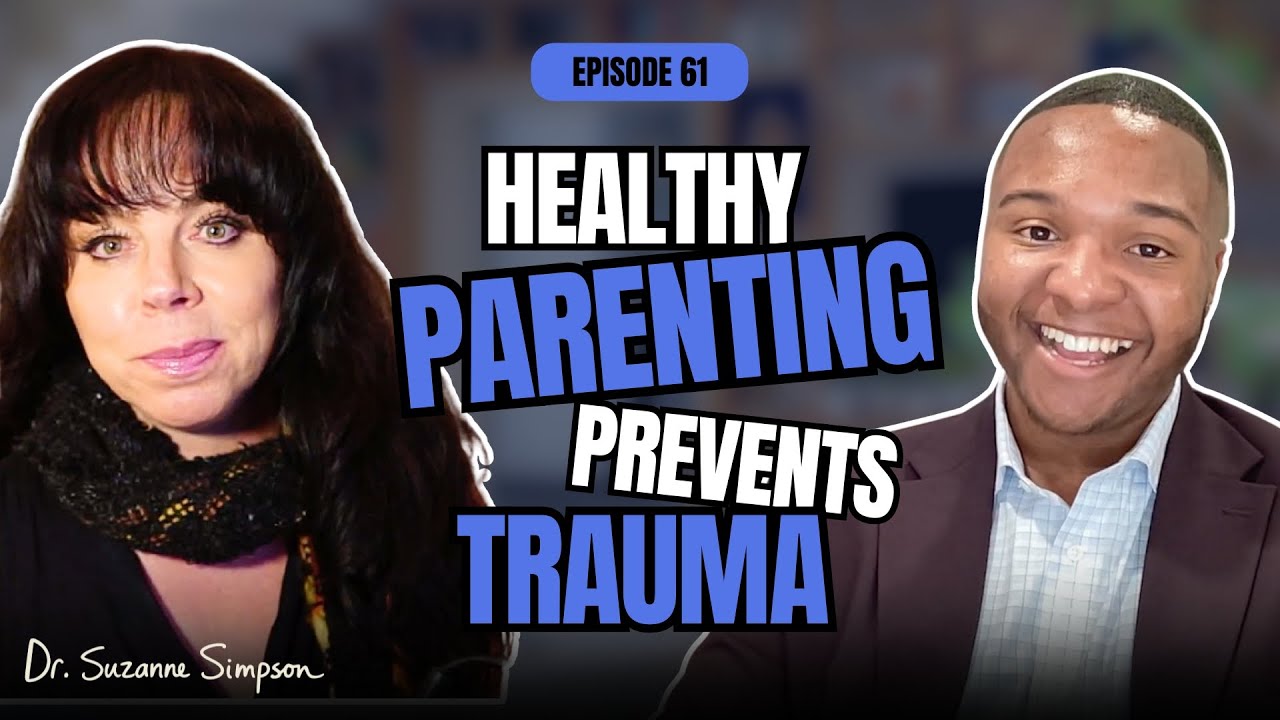
Dr. Suzanne Simpson:
Eugene Bertrand, good afternoon from you in New York City. Thank you for joining me.
Eugene Bertrand:
Thank you so much for having me, I appreciate it.
Dr. Suzanne Simpson:
I want to talk today about a very difficult, hard topic of the hidden epidemic of domestic violence against
males. And you are my perfect guest because you’ve written a book, which we’re going to get into. But
first, I told you just before we started recording, like you are a busy guy. So I see your intern at Federal
Public Defender’s Office in your area. You’re finishing up your Master’s of Social Work at Columbia and
you’re 23 years old. And your book is called Resilience Breaking the Chains. Just that title I love. Love it.
So before we dive into this huge issue of domestic violence against men, tell me about yourself in terms of
let’s start easier with your work and what you’re doing now before we get into the more personal stuff.
Eugene Bertrand:
Yeah, absolutely. So like you said, I’m Eugene and I’m just really kind of just enjoying the fact that folks are
reading my book and they’re they’re really engaging with the piece of literature that I’ve written. And I’m
also really loving my experience doing my work at the Federal Defender. Some of my work there includes
humanizing the clients that are charged with federal crimes. Oftentimes there’s a story behind why they’re
charged.
Dr. Suzanne Simpson:
Okay, can we just pause on that? Because I actually was reading that about you on your LinkedIn bio. I
love that there is research into somebody’s past life because like I’ve worked with many kids that have
Get on Their Turf | Dr. Suzanne Simpson | drsuzannesimpson.com Page 1
records and, you know, probation officers and there’s always something behind that. And we’re so quick to
judge horrific behavior, which is I’m not taking away it’s still horrific, but there are so many reasons layered.
So
Eugene Bertrand:
Yeah.
Dr. Suzanne Simpson:
What do you do with it? Like you find out what happened to them and then what?
Eugene Bertrand:
Yeah, so we would meet with a client and then oftentimes what we’ll do is we’re really trying to find an
alternative pathway to incarceration. folks that are currently incarcerated, we meet with them and we try to
figure out why did you commit this crime? Are there like circumstances that might have contributed to that?
Or we’ll meet with the family. Sometimes we’ll go one, two generations back to try to figure out there’s like
any mental health diagnoses that have contributed to X, Y, and Z persons committing the crime. And then
we’re part of the defense team. So then we are able to argue for a less harsher sentence. Exactly.
Dr. Suzanne Simpson:
Okay, based on their history. Okay, here’s a question for you. I don’t expect you to know this, but I’m really
curious. So you know ACEs, adverse childhood experiences, you did that. So trauma score out of 10. 10
out of 10 is like every bad thing possibly done to you has been done to you. Do you know the average
trauma scores of the people that you work with? Or is there any data? Can you kind of say that maybe just
anecdotally?
Eugene Bertrand:
That’s a good question. I’d probably say it would be… I’d probably say it was up there. I don’t know if I can
give a number, but I would definitely say that it would be probably like right in the middle. Probably like
maybe like a six only because there are mitigating factors, right? That people don’t consider. And
everybody’s case is different, right? And people are currently incarcerated because of things that might’ve
happened to them because they might have a certain diagnoses. They might not have known what they
were doing.
Dr. Suzanne Simpson:
Okay, like five, six.
Eugene Bertrand:
And that’s why I love my work doing mitigation because you’re in this place where you can humanize them,
you know? So, and I absolutely love it.
Dr. Suzanne Simpson:
Yeah. Okay, let’s talk about you personally. So what do you want to tell me about your upbringing? You’ve
written a book about domestic violence against males and I’m using the word males because we know this
to domestic violence against boys, teenage males and men in their 60s, 70s, 80s. So that’s why I use the
word males. What do you want to tell me that is your story to tell about your personal life and upbringing?
Eugene Bertrand:
Yeah, so I was raised by a very strong mother and my grandmother. They were very instrumental in my life
and they’ve taught me the importance of wearing my heart on my sleeve and the power of being
vulnerable. within that, I’ve always kind of led with that in whatever I was doing in my life, whether that’s
Get on Their Turf | Dr. Suzanne Simpson | drsuzannesimpson.com Page 2
academic writing, whether that’s playing a sport.
Dr. Suzanne Simpson:
Hmm.
Eugene Bertrand:
I’ve always been able to kind of speak up, I recognized that when I endured my own situation with
domestic violence, speaking up was something that was really difficult for me to do. And in that
experience, that’s when I told myself, you know, maybe I write the book.
Dr. Suzanne Simpson:
Did you feel at the time, so there was domestic violence towards you, did you feel at the time that you
didn’t have a voice or people didn’t want to hear?
Eugene Bertrand:
And that’s exactly what I felt, Suzanne. I think that when I was enduring that, like to be very clear, I almost
lost my life. I almost died. And because society oftentimes discourages men, males to kind of share their
story and be vulnerable, I’m being so honest. I was so nervous to even say anything because on one hand,
I almost lost my life.
Dr. Suzanne Simpson:
Hmm. Mm-hmm.
Eugene Bertrand:
And on the other hand, I’m dealing with what society might say about me saying, I’m a survivor of this, and
this is what I’m going to do from forward. But I didn’t feel like I had it worse.
Dr. Suzanne Simpson:
I have so many questions that we’re going to get to about that particular issue. I actually want to know
though, so how has your upbringing shaped who you are today in terms of the good that was done to you
and the bad that was done to you?
Eugene Bertrand:
You know, that’s a really good question. You know, I think that what I’ve learned is that you have to live
every single day like it’s your last. And I’ve also recognized the power of forgiveness. And sometimes you
have to forgive the other person. What I had to do was forgive the other person so I can forgive myself,
right? Because in me kind of feeling like I had no voice, I was almost kind of doing myself a disservice
because I recognize that there’s so much power in vulnerability. So I have to recognize a lot of things. And
I think the biggest thing that I recognize is that there’s so much power in forgiveness.
Dr. Suzanne Simpson:
There is. So when you say to forgive yourself, do you mean that you didn’t speak up for yourself in the
moment? Okay.
Eugene Bertrand:
Yeah, I think it was hard for me to even talk about it, right? Because you’re dealing with that internal
conflict and you know, with motivation, it has to be intrinsic. You have to have that self motivation to be
able to do things like speak up, right? And I was really struggling with it. And then I, some point, you know,
I was talking to my friends and I shared that I almost died of my friends and they were like, Eugene, like
this same thing happened to me too. And that’s when I…
Get on Their Turf | Dr. Suzanne Simpson | drsuzannesimpson.com Page 3
Dr. Suzanne Simpson:
Yeah. Yeah. Well,
Eugene Bertrand:
as it was like bigger than me. You know, nobody speaks up.
Dr. Suzanne Simpson:
nobody speaks up. Yeah. Yeah. I love the idea of forgiveness that you’re setting your own self free. It’s
setting you free.
Eugene Bertrand:
Yeah, that’s exactly why I named my book, Resilience Breaking the Chains because at that point I
recognized that I wanted to be part of that solution to help break those societal chains and lead with
resilience, you know, because it’s bigger than me. I have a little brother who’s four and I wanted to show
him that, you know, you don’t necessarily have to write a book at 22, but what you can do
Dr. Suzanne Simpson:
you
Eugene Bertrand:
is you can be vulnerable, can be resilient, and just because society might tell you something, but doesn’t
always mean that you have to follow that. You can kind of step out and do your own thing.
Dr. Suzanne Simpson:
In writing the book, what are you the most passionate about? In terms of like the messaging you want to
send and you’ve got a lot of messaging? What’s the number one driving passion for you there?
Eugene Bertrand:
You know, I think that… think that the biggest thing, the most thing that I’m proud about in the piece of
literature that I’ve written is that I was really able to redefine what strength is, right? Not as really
suppression, but as self-awareness, right? And in my book, I really hone in on the fact that masculinity can
coexist with vulnerability and that we need to normalize things like therapy tiers.
Dr. Suzanne Simpson:
That is it. I think that’s it. Like masculinity is symbiotic with vulnerability. You can have the two together and
they work with each other, feed off each other. Yeah. That’s powerful. That’s powerful. I want to now get
into the problem of violence against men. And then I want to talk about the solution next, but I want to dig
into what the problem is. So I was researching for this. I’m in Canada here, Vancouver, BC.
Eugene Bertrand:
It is. It is. Yeah, they do. Exactly.
Dr. Suzanne Simpson:
Statistics Canada in 2020 issued like gave a report of intimate intimate partner violence, which is different
than domestic But it’s it’s I think still I think we still the same issues of boys and teens and men not
speaking up and The in the reports that were given to police of a violent situation 20 % were males That’s
a good number like that’s a high number So with that my question is what do you think that it’s number one
holding men back?
Eugene Bertrand:
Get on Their Turf | Dr. Suzanne Simpson | drsuzannesimpson.com Page 4
Yeah. Right. Yeah.
Dr. Suzanne Simpson:
in reporting violence of any time. Domestic partner.
Eugene Bertrand:
I the cultural silence around male survivors has a huge reflection on gender and power norms. I think that’s
what I’d say. I think that when men suffer abuse, it disrupts traditional power dynamics. So silence ends up
becoming survival. And I think that we need to create a space where people are vulnerable and people can
talk about their emotions because what is happening is, know, boys, teens, men, they’re suppressing their
emotions. And they’re doing so because they don’t always have the space or the environment to feel them
because again, society tells us not to, tells us don’t cry, don’t ask for help, you won’t feel how you feel.
Dr. Suzanne Simpson:
You I’m if I can add to that I I’m allowed to speak as a woman you’re not Right. Like I’m speak as a woman
and I said to you early I have strong opinions about this. We have done a lot of disservice to men to silence
men as women I am the first person for the me to movement, but I’m not at the detriment of men being
quiet and I have Girlfriends that I’ve had dialogues with that really don’t have a lot of patience for what a
man might do And I have said are you kidding me?
Eugene Bertrand:
Yep. Yeah. Exactly. Right. Yeah.
Dr. Suzanne Simpson:
Do you want me to tell you about the teenage girls that I have worked with that are absolutely vicious? And
so there’s, think that part of it is there’s a perspective and rhetoric that it is always the man that’s the
perpetrator and that the woman’s weaker. And as a woman, that’s offensive to me. It’s offensive. So I think
we’ve just done a lot and I don’t know if you’ve, there’s a documentary called Red Pill. Watch it, it’s so
good.
Eugene Bertrand:
It is. It’s very offensive. Yeah.
Dr. Suzanne Simpson:
She’s a feminist that did the documentary, but she talks about like what she’s learned about, whoa, like
what’s not being done for men and the silencing event. And for example, like, guess what? If you’re in a
domestic dispute and the man hits back, guess who’s gonna go to jail? It’s gonna be the men. I actually, I
dated a guy that he had violence towards him and he couldn’t hit her back. She was beating him up, but he
couldn’t hit her back.
Eugene Bertrand:
And that’s the thing too. Like think it’s really important to make sure that when you’re entering these
relationships, you’re able to enter them with emotional maturity. So that if you feel yourself getting to that
place, you step back. Like you don’t, you try not to engage because that can be a life-ruiner for you.
Dr. Suzanne Simpson:
Yeah, yeah, it’s tough. and why do you think, like you talk about stigma in your book, why do you think
alongside, this is kind of an extenuating question from the first one, that violence against males is so
invisible? Like, I think we touched upon it already, but it is really invisible.
Get on Their Turf | Dr. Suzanne Simpson | drsuzannesimpson.com Page 5
Eugene Bertrand:
It is. You know, I think because a lot of people don’t want to sit with the discomfort because when you’re
disclosing things, when you’re talking about like when people have self-disclosure, you know, it can be
really triggering, right? And oftentimes, like honestly, I believe that when men are being vulnerable and
they’re talking about their emotions,
Dr. Suzanne Simpson:
and
Eugene Bertrand:
in specific talking about a domestic violence situation, people are like, oh my, wait, what? Like you almost
kind of say like, huh? And then society almost is just like, oftentimes society says, how’d you let that
happen to you? You’re a man, you should be strong. What did you do to put yourself in that situation? But
it can be such a deeper picture than that. And nobody really wants to, you know, that deeper lens. It’s
really important to kind of
Dr. Suzanne Simpson:
Yeah. Yeah, totally, totally. Yep. Yep.
Eugene Bertrand:
Think about that there.
Dr. Suzanne Simpson:
You know, one thing I find shocking is women’s shelters versus men’s shelters for domestic violence. I
mean, we said 20 % of men report it. That’s not the ratio of our support shelters within violence. There’s
nowhere near that percentage for men versus women. Women get all of the shelters for safety. Yeah,
yeah.
Eugene Bertrand:
Isn’t that so sad? And I just did, I contributed to the National Association of Social Workers, their blog
talking about this for Domestic Violence Awareness Month this past October. And I was talking about that
in there, how there aren’t spaces for men to go to have like some type of shelter. Oftentimes they get
turned away. And I think we have to ask our society, why is that? Why do we feel like
Dr. Suzanne Simpson:
Okay.
Eugene Bertrand:
we can turn men away from seeking that same support that women rightfully so should be able to receive,
you know? Exactly.
Dr. Suzanne Simpson:
Yep, yep. A woman wouldn’t be turned away. They wouldn’t. You know, it’s interesting. My husband and I
volunteer at our local shelter. So our Vancouver, downtown Eastside is really, really huge, huge number of
people that live with substance use disorders, mental health disorders, biggest homelessness population
in Canada. We were serving on like a Tuesday night or something, serving dinner.
Eugene Bertrand:
Yeah. Mm-hmm.
Dr. Suzanne Simpson:
Get on Their Turf | Dr. Suzanne Simpson | drsuzannesimpson.com Page 6
I would say that 90 % of the guests were male. 90 % at this shelter, just come for dinner. And I walked
away saying, what are we doing? Why is, I’m not seeing 50-50. Why are the men the ones that are coming
for a meal at a shelter and using the shelter more?
Eugene Bertrand:
Mm-hmm. Yeah. Mm-hmm. Yeah.
Dr. Suzanne Simpson:
infinitely more numbers, infinitely greater.
Eugene Bertrand:
yeah. You know, I’ve honestly seen the same thing here in the US, like, and honestly, it’s so disheartening.
And it’s so funny that you mentioned serving, volunteering some of your time at your local shelter. I do the
same thing every single Christmas. I always donate some food and, you know, I try to engage in
conversation with folks because I think so far so often, people think it’s, even though it’s a great act of
service and a great act of kindness to contribute, I think it’s also really important to meet people with the
same level of respect that you’d want to be met with. So I go out of my way to engage in conversation and
genuinely ask, how are you doing? You know, that can just make, that can make somebody’s day, you
know? Yeah.
Dr. Suzanne Simpson:
Yeah. So what I learned about homelessness when I was teaching at the psych unit is the worst thing of
homelessness is being invisible. Nobody sees you. Nobody says your name. We took our kids. We took
our kids to serve with us once I said, you say their name, find out their name, say their name over and over
again, because they don’t hear the name. Nobody says their name. Like you are worthy and you matter.
And you are still here with a purpose. And it’s not being spoken to. Okay, here’s my last question. I think
this is a heavier one.
Eugene Bertrand:
Yeah. Exactly. Exactly.
Dr. Suzanne Simpson:
of our problem before we move into solutions. Can you articulate for me what violence, either domestic or
partner, all of that, towards a man does to your soul, like the soul of a man? it’s a bit like, number one is
maybe to a child. We know when trauma is done, the earlier the worse, the more detrimental and the more
longer effects and damaging the earlier that happens, but also just to the soul of a man.
Eugene Bertrand:
Yeah, that’s a really good question.
Dr. Suzanne Simpson:
Do you want to start with a child? Start with a child and then walk with me. Like what do a does do? Child.
Tell me first, what does it do to a child? Domestic violence against a young boy.
Eugene Bertrand:
Yeah, so, all right. So give it to me again, some child. Yeah, I can speak to my own experience and
through what I’ve learned in coursework. Domestic violence is a whole bunch of things to kids, right? It
teaches that very young that, you know, that if that’s occurring or if that’s happening to you or if that’s
happening in your home, that, you know, that’s what you deserve. And that’s how you become when you
get into your own intimate partner relationship. Right. It also teaches the child that, you know,
Get on Their Turf | Dr. Suzanne Simpson | drsuzannesimpson.com Page 7
Dr. Suzanne Simpson:
Mm-hmm.
Eugene Bertrand:
this is, it teaches the child that, you know, it’s okay to be silent when they say shut up, say anything about
this house, stays in this house. It shows the child that, you know, they have no voice and that also directly
influences their self-esteem and then they come into different spaces and that comes out in different ways.
So oftentimes when we’re in a school setting and there’s a child that’s acting out, how many times are we
thinking about what is happening at home? Sometimes what’s happening at home is domestic violence
and they’re acting out in school or they can be very silent. They can go mute and not say anything because
they’re not able to have the wherewithal to even vocalize those emotions because that traumatic event that
they’re kind of seeing every single day or every other day or however often that might occur has directly
impacted them.
Dr. Suzanne Simpson:
You know, I mean, I know you know this, this is more your expertise than mine. I researched this stuff for
my thesis that we only really have a good understanding of what childhood trauma does since the late
1990s, like 1998, right? When Feliti brought out the first ACEs childhood trauma. So this is new
understanding too, of what trauma, like to any gender, what trauma does. It’s like your lifetime of…
Eugene Bertrand:
and that’s the thing. think a lot of children as well, they mirror their parents’ coping mechanisms, unspoken
trauma that’s passed down. And what I’ve learned in my work is that we have to really make sure that
we’re looking beyond that child or that client, whoever, beyond the lineage. And that goes again to my work
doing mitigation at the Federal Defender, going
Dr. Suzanne Simpson:
impact.
Eugene Bertrand:
on that paper and you’re getting that story, asking those questions, why, you know?
Dr. Suzanne Simpson:
yeah, for sure. Okay, so what does it do to a man? So say partner violence. What does that do to the soul
of a man?
Eugene Bertrand:
Yeah, that’s it. does a whole bunch. It does a whole bunch, It does a whole bunch. think as a man, think
intimate partner violence, are you talking about witnessing it or are you talking about being on the receiving
end of it?
Dr. Suzanne Simpson:
inflicted upon inflicted upon the mountain.
Eugene Bertrand:
I think it diminishes their, it has the potential to diminish their self-worth, right? Because they might be
trapped in a few internal pushing pulls. They might be asking themselves, I less of a man because this is
happening to me? Or what am I supposed to do in this situation? Am I supposed to fight back and take this
and then be seen as a weak or less than? Who am I supposed to talk to? Because if I talk to my friends,
they’re going to look at me as less than. And it also allows you to question your own self-worth. Like, you’re
Get on Their Turf | Dr. Suzanne Simpson | drsuzannesimpson.com Page 8
questioning, like, you know, again, am I a man? But am I worthy to even be in this space? Right? I think
when you’re enduring that as a male, as a man, you know, you’re nine times out of 10.
Dr. Suzanne Simpson:
Yeah.
Eugene Bertrand:
still trying to operate in this life, trying to figure out who you are. I can tell you right now, as a boy that’s
growing into a man right now, every single day you’re trying to get to the better version of you, right? Every
single day you’re trying to better yourself. And I can confidently say that if a man is enduring that pain, that
is inflicting so many deeper… deeper internal wounds within them. Because oftentimes they don’t have the
space to speak. And oftentimes what happens is you’ll, you’ve probably seen like memes or like you’ve
been in conversations where men have talked about engaging a lot in video games, right? Whether that’s
like playing like the Sims or like 2K. I can give Sims as an example. A lot of men, they’ll engage a lot in
Sims, which is a video game. You can do it on the computer, your cell phone. or like a gaming console.
And that simulator allows you to operate like a different family and you’re able to, you know, do whatever
you want with them. You’re literally living your life through them. And oftentimes what ends up happening is
men really focus a lot on that game. They’re on the game all the time. When they wake up, when they want
to chill and relax, they’re on the game. They’re oftentimes met from their partner with, off that little game.
Why are you always on that game? Well, they’re on that game because that’s their escape. They are able
to have that autonomy through their life, if it was taken away from them, through the game. know, they’re
literally able to alter, you know, some other life that’s taking place in a gaming console because they might
not feel like they have the autonomy to do it in the modern day, you know?
Dr. Suzanne Simpson:
You just get handicapped. Your hands are tied behind your back with life. Let’s move now to what you do
with it. So to the solution. So I want to shift then of where is the hope and forgiveness and resilience. So
my first question is, tell me about the strength that is needed to overcome the trauma of violence for a
man.
Eugene Bertrand:
Yeah, that’s the thing. That’s the thing. That’s a really good question, Suzanne. think that a few things
really. I think that, I think I mentioned earlier that you have to have that intrinsic motivation. like you have to
kind of find it within yourself to be able to say, I want better for myself. This is not a reflection of me and
what I’m gonna do. I can say that my motivation behind me writing my book and me kind of.
Dr. Suzanne Simpson:
Mm.
Eugene Bertrand:
really engaging and healing was that I had a little brother that was watching me. He looked up to me and
my responsibility in it was to honor people or what was to heal myself. I engaged in deep EMDR, right?
absolutely. Absolutely did. After a few sessions, absolutely. And I recognized that.
Dr. Suzanne Simpson:
did you? It worked. Mm hmm. Yeah.
Eugene Bertrand:
I want it to be a part of the solution to honor those who’ve carried invisible wounds in silence.
Get on Their Turf | Dr. Suzanne Simpson | drsuzannesimpson.com Page 9
Dr. Suzanne Simpson:
Can you just define for anybody listening who doesn’t know EMDR, the acronym, and in like 30 seconds
what that is? Because I think that’s a really important tool for people with trauma.
Eugene Bertrand:
Yeah. So eye movement desensitization, reprocessing therapy, it allows you the opportunity to kind of
recognize those emotions. But like, at least with me and my experience, they were really, they were really,
really, it was a really traumatic experience for me. I was asleep and I was really struggling and through like
hand movements. That’s how my therapist said they did it through hand movements. allow me to
reprocess those emotions safely because with the trauma, it gets stuck in your brain and having the eye
movements and engaging in that type of psychotherapy allows you the opportunity to process it in the right
way.
Dr. Suzanne Simpson:
You know that they’ve, I was researching about EMDR and they’ve linked the same brainwaves as our
REM sleep with EMDR, our good restorative REM sleep. They’ve linked with the same. Yeah. Interesting,
hey? Yeah. Yeah.
Eugene Bertrand:
Yes. Yes. Yes. Yeah. And honestly, you mentioned earlier, like the all of the great research that we’re
getting like now in, you know, 2025 is amazing. You know what saying? Folks are and folks are constantly
getting better, you know, and I’m absolutely here for it I’m loving it, you know.
Dr. Suzanne Simpson:
Mm-hmm. Yeah, we’re good. Yeah. when we know better, we don’t just do better. Maya Angelou says we
respond better when we know better. We respond better. Yeah. Yeah.
Eugene Bertrand:
Yeah. Yeah, exactly. I agree with you 100%. And that’s thing, but you have to want the opportunity to do
better. So I’m really.
Dr. Suzanne Simpson:
Is your mother a strong force of strength in your life? Because I’m listening to you. And listen, Eugene,
some people would descend into substance use. Some people would not even begin to consider anything
beyond just surviving.
Eugene Bertrand:
She is, yeah.
Dr. Suzanne Simpson:
So I’ve interpreted what you’re saying, like you had to have something really grounding in your life to still
build up that self-worth when you had it removed with the violence.
Eugene Bertrand:
Yeah, to answer your question, yeah, absolutely. My mom is my driving force, you know, and I recognize
that there was power, like I said, in vulnerability and she is also in the same field that I am, the mental
health field. And so I see her every single day, you know, putting on that therapist cap, but I think what she
really does that inspires me, she takes care of herself. So she has her own.
Dr. Suzanne Simpson:
Get on Their Turf | Dr. Suzanne Simpson | drsuzannesimpson.com Page 10
Okay. Yeah, yeah. Yeah.
Eugene Bertrand:
therapists. And so
Dr. Suzanne Simpson:
Okay.
Eugene Bertrand:
I knew that in doing this work, I had to make sure that I did that right to get myself right before I was able to
hold space and support others. I would say my mom is, you know, really influential in my life and being
able to write my book, having somebody of such significance in my life on my side, definitely encouraged
the pages that are in there.
Dr. Suzanne Simpson:
and I think one of the messaging then for households that have violence is you need one parent or one
adult to build you up and esteem you and do all of the opposite of the bad things that are being done to
you. I’ve had that with other students too, that there’s still things, you know, that strength that arises to go
through the work.
Eugene Bertrand:
Yeah, I agree. And I agree. You know, I think it can be a parent, it can be a chosen family member, right? It
can be somebody that they can look to for support when they feel like they haven’t gotten it, especially
when, you know, it’s like a domestic violence situation.
Dr. Suzanne Simpson:
Mm-hmm. Sure. Yep. You know what I think it is? I want to, if I can summarize, I think it’s that one person
that says, I see you, you are worthy. I know you can do this. I’ve got your back. It’s that, it’s that really, and
it might be unspoken messaging, but my big thing on the psychiatric unit was you are worthy. That was it.
How can I instill self-worth to my students that had all of it stripped from them?
Eugene Bertrand:
Yes. Yeah. And that’s the thing too. think a lot of the times from what I’m hearing in my work and just from
my own experience, a lot of people feel like they’re not living, they’re just surviving. And a lot, you know
what I’m saying, right? And a lot of, yeah.
Dr. Suzanne Simpson:
That’s my next question. It’s my next question. Finish up. I’m to ask you. Finish up. I’m reading it. right
here. Go ahead. Go,
Eugene Bertrand:
Yeah. So, and you know, what I’ve recognized is I’m really enjoying the opportunity to create the space for
people to, you know, feel like they’re actually living their life to the, you know, fulfillment that they feel like
they want to.
Dr. Suzanne Simpson:
I did an interview with Gabe Howard about bipolar disorder and what he said has stuck with me. People
don’t want to just get by, people want to thrive. Like put that on a billboard. So here’s, I’m not kidding, this
is the next question. Can you differentiate for me between survival and resilience?
Eugene Bertrand:
Get on Their Turf | Dr. Suzanne Simpson | drsuzannesimpson.com Page 11
Yeah, I think when I think about the word resilience, I think a lot of people think about it as like the bounce
back, like how quick you’re able to kind of, you know, go through something and come back for it and
come back from it. But I think about resilience in like a sense of transformation. And what I think about
survival, I think about, you know, like I said earlier, you’re surviving, you’re not really being
Dr. Suzanne Simpson:
Hmm.
Eugene Bertrand:
present in the moment, you’re doing everything just to get by. Or I think that could be one of the definitions
of, you know, a way to kind of describe surviving. You’re doing things just to get by, but you know, you
might not be fully present in the moment.
Dr. Suzanne Simpson:
Yeah, I just thought of something. I wonder if survival is not dying. Like I’m not dying and then wait and I
wonder if like strength and resilience is I am living. I’m truly living. So survival, I’m not dying. I’m here, not
dead. And resilience and strength is I am living and thriving. Just came to me, I don’t know.
Eugene Bertrand:
And that’s insane. I feel like, and no, and I think you’re right. I feel like with survival, it’s like, I feel like it
would be like the process of like managing like the immediate danger or stress in order, like you said, to
like not die. You know what I’m saying? Or to avoid whatever harm might be there. like resilience really has
the opportunity to
Dr. Suzanne Simpson:
Yeah, yeah, yeah.
Eugene Bertrand:
you know, have like that long-term effect, right? Like to kind of be in a space where you’re able to, you
know, thrive, you know, despite whatever challenge you may have endured. So, yeah.
Dr. Suzanne Simpson:
I’ve always said to I really think I think it’s really important to define the spectrum of grit and resilience.
Because I have some kids right now I’m not kidding, just to see me after school to get a bit of work done
when the school is cleared out. That’s, that’s their grit. That’s, that’s what they can manage, right?
Eugene Bertrand:
Yes.
Dr. Suzanne Simpson:
My, I was raised with zero trauma and my grit was I could do 12 hour work days on a PhD. Like it just, we
have so many different backgrounds and histories. And so I, I, I sometimes hesitate with that word of
resilience because what are we talking about? But it’s, it is a spectrum.
Eugene Bertrand:
Yeah, I agree. I think resilience can involve so many different things like recovery or adapting to
something. When I think about resilience, I think about how you’re able to regulate your emotions. And I
think about wellness and how you’re able to kind of grow from every situation. Because again, a lot of
people define resilience as the bounce back.
Dr. Suzanne Simpson:
Get on Their Turf | Dr. Suzanne Simpson | drsuzannesimpson.com Page 12
Mm-hmm. Mm-hmm.
Eugene Bertrand:
how quick you’re able to kind of recover from something. But people don’t recognize that resilience, in my
opinion, can also encompass maintaining your emotional and mental health, right? You know what I’m And
I really love how you brought in grit there too. Like when I think about grit, I think of like persevering and I
think about like passion and like sticking with something, you know?
Dr. Suzanne Simpson:
Yep, I agree, totally agree, yeah.
Eugene Bertrand:
having goal attainment and things like that. I love that.
Dr. Suzanne Simpson:
So before I do my so famous wrap-up question, my last question here of just solutions, tell me what is a
woman’s role in all of this to mitigate the stigma, the silence, the shame of violence towards men in a world
of Me Too movements?
Eugene Bertrand:
Ooh, that’s a good question, Suzanne. I love your questions!
Dr. Suzanne Simpson:
That’s hard one. I’m sure I’m get some hate for some stuff I’ve said about women on this.
Eugene Bertrand:
Yeah, no, I like your questions. You know, I feel like a woman’s role could be just to hold space, you know?
I think it can go either way, a man or woman, you know what I’m saying? I think holding space and being
non-judgmental, you know? Because like I mentioned early in the very beginning, when you’re talking
about your trauma and when you’re talking about something that is the trigger for you, you don’t want to be
met. with or okay. You want to be met with genuine care and if you want people to be that are supportive.
So I would say to answer your question to never jump to conclusions and to not always feel like you have
to provide a resolution. Sometimes, you know, our men just need a space to be heard, especially when
they’re disclosing something that can be really traumatizing.
Dr. Suzanne Simpson:
think a woman’s role too is to end this very damaging rhetoric of the big bad man who’s always the
perpetrator, who’s always the violent one, who’s the one that’s inflicting all of our historical problems.
Listen, things have happened, absolutely, that maybe women didn’t do. But I also think, and I’m huge into
like taking responsibility, I’m huge into like, I’m responsible for my decisions despite my background. I’m
still responsible for what I do today if I want to end generational trauma. And I’m also
Eugene Bertrand:
Yeah.
Dr. Suzanne Simpson:
big on responsibility. Women aren’t perfect. Women can be not nice. And I just think that opening that
dialogue to understand like our own role in things. And I don’t think you have to diminish a woman’s voice
or women’s rights or what we’re doing with me to or being heard and believed. I don’t I think you can have
those two together.
Get on Their Turf | Dr. Suzanne Simpson | drsuzannesimpson.com Page 13
Eugene Bertrand:
I think so too. And I think another huge word is intersectionality. And I think that we have to make sure that,
you know, we’re standing in solidarity with one another because we’re stronger in numbers and we’re
better together than we are apart. And I think when you kind of find yourself diminishing one person’s
experience versus the others, that’s where the clash can come in. And again, like I mentioned, nobody
wants to be met with any type of, you know, ill emotion or ill feeling when they’re disclosing something that
can be.
Dr. Suzanne Simpson:
Hmm. Yeah.
Eugene Bertrand:
super traumatic, regardless of what may have happened in the past. I think our biggest responsibility is
how we can move forward and be the best version of ourselves in the present day.
Dr. Suzanne Simpson:
Yep, good. Okay, wrap up questions. I’m wrapping up taking this back to the goal of just really tackling this
issue of violence towards males. Can you tell me the best advice you would give to any male of any sort of
violence for getting help?
Eugene Bertrand:
You know? Yeah. Yeah, recognizing that your vulnerability is your strongest superpower. want you, if
there’s a man that’s listening to this that’s in this situation, I want you to know that, you know, your
vulnerability can be your strongest superpower, especially if people looking up to you. I didn’t realize that I
was speaking, I knew I was writing a book, Suzanne, but I didn’t know that it was actually gonna like, reach
people in way that it would reach people and then become a best seller. But somebody had reached out to
me and told me that, you know, my vulnerability allowed them the opportunity to start therapy and take part
in their healing. I want you to recognize that if you start something, it can create a ripple effect.
Dr. Suzanne Simpson:
Okay, next question. We talked about your mother. What can parents do to create safe and loving homes
for any child within the midst of maybe some domestic violence that’s happening?
Eugene Bertrand:
I think I’d probably say to do a few things. I’d probably say to model emotional maturity. I’d probably say
model what that looks like, like naming your emotions and normalizing conversations that might be difficult.
I think it’s really important to validate emotions. Even if you don’t agree with them, let your child know that
their emotions are valid, right?
Dr. Suzanne Simpson:
Mm-hmm.
Eugene Bertrand:
like punishing them instead of saying like stop crying or be a man or all those things or even like
encouraging healthy coping strategies. I think we talk about them, but like when you’re in the midst, it can
be hard, you know? So I think I would say those three things. Yeah.
Dr. Suzanne Simpson:
What do you think about the concept of get out? It’s just so, it feels so complicated, like getting out of the
situation with your children. Sounds easier said than done in many circumstances. And we have, I think, a
Get on Their Turf | Dr. Suzanne Simpson | drsuzannesimpson.com Page 14
lot of judgment towards maybe staying in a relationship.
Eugene Bertrand:
Yeah, think, well, tell me a little bit more about your question. Tell me somewhere.
Dr. Suzanne Simpson:
I mean, get out about if somebody’s in a household with domestic violence, that the non inflicting parent
gets out of that relationship and out of the household with the children.
Eugene Bertrand:
Hmm, I think what I’ve learned is that you can only do the best in whatever situation that you’re in. And I
recognize that, you know… Everybody has their own level of, like when they want to say, I’m cannot force
somebody to do that, right? You can encourage, you can try to push, but if you push too hard, that can be
met with a level of like reluctance to kind of share more about their situation. You know?
Dr. Suzanne Simpson:
Yeah, good point. Yeah, for sure, for sure. Like I said, when I started my question, it feels like it’s wrought
with judgment of people saying, get out. And it seems so complicated, like so much more complicated in all
these situations where there is domestic violence, of the actual getting out or away from the violence.
Eugene Bertrand:
exactly. And I think, you know, when you’re on the outside looking in on different people’s situations, it can
be easy, like you said, to judge, right? And I think, you know, and I think getting out of this situation can
encompass a lot of different things. have to think about, especially if, you know, you have children to think
about too, because it’s not just you, it’s how many other lives after you. You have to think about the
financial replications of things, you know? So, yeah.
Dr. Suzanne Simpson:
Yeah, lots of judgment. absolutely. Okay, here’s my last question. What is the one primary thing of
everything we talked about? The one primary thing it’s gonna take to end the stigma of violence towards
males.
Eugene Bertrand:
question. I think when you ask me that question about how it starts from a child and went to like manhood,
think when I think you have to really start practically and start at the home level. I think it starts from, you
know, when you’re young. I think kids have to see emotional literacy and emotional maturity being
demonstrated to be able to do that in adulthood. They need to feel like their emotions are being validated
instead of being punished. They have to feel like they have routines that are like predictable, consistent
schedules, rules, consequences, because, you know, trauma thrives in things like chaos, but stability
counts that. And I think it’s really important to also just kind of, again, encourage those healthy strategies.
So I think the biggest thing that I’m taking away from this conversation is that we have to kind of try to do
these things when these kids are young, you know, because then they’re learning, just like they have to
learn to walk.
Dr. Suzanne Simpson:
Yeah. Yeah. Yeah.
Eugene Bertrand:
They have to learn to drink. It has to be demonstrated.
Get on Their Turf | Dr. Suzanne Simpson | drsuzannesimpson.com Page 15
Dr. Suzanne Simpson:
feels too like just talking about it. What we’re doing right now is pivotal for young children, for any age
group, and talk, end the stigma.
Eugene Bertrand:
and the stigma, you know what I’m saying? Just that’s the thing. Like I think a lot of people, like I
mentioned, they’re nervous about it. People don’t wanna talk about it. But again, your vulnerability is your
superpower. When you’re talking about conversation, it might be difficult. You can alter the conversation to
figure out how you wanna have the conversation or have conversations about topics like this, but they’re all
very essential and they can be.
Dr. Suzanne Simpson:
talk about it.
Eugene Bertrand:
It’s one minute.
Dr. Suzanne Simpson:
Okay, Eugene Bertrand, where can we find you and your books on Amazon? I will put things into show
notes, but tell me where we find you.
Eugene Bertrand:
Absolutely. So I’m on LinkedIn, Eugene Z. Bertrand. I’m on Facebook. And you can also reach me on my
website, eugenezbertrand.com.
Dr. Suzanne Simpson:
You are going to do big things in this world. You’re going to do big things, You have longer.
Eugene Bertrand:
Thank you. Thank you. You and me both.
Dr. Suzanne Simpson:
you. Thank you for your time.
Eugene Bertrand:
Thank you so much for having me.