
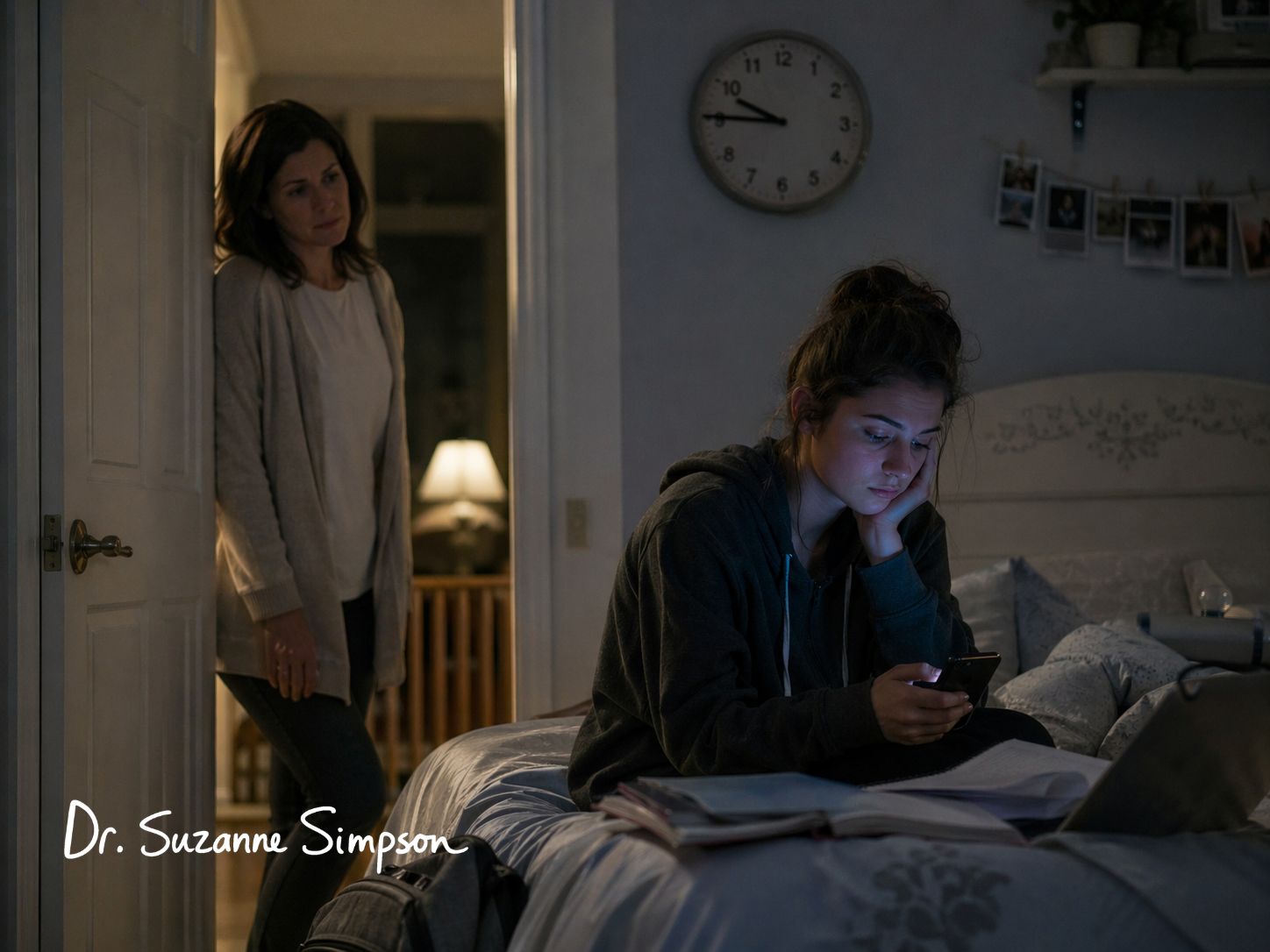
It is 9:47 p.m. You walk past your teen’s room. The glow of a screen is on their face. You ask, “How was your day?” Without looking up, they say, “I’m fine.”
And something in you tightens.
Because you know the difference between fine and fine. One is a normal, tired, end-of-day answer. The other is a door quietly closing.
If you are parenting teens and tweens right now, you are not imagining the pressure. Many young people under-report how bad they feel, even to the adults who love them most. Sometimes that is privacy. Sometimes it is shame. Sometimes it is an honest belief that talking will make things worse, or that you will not understand anyway.
In my work with teens in psychiatric care, one thing has been consistent: teens do not need perfect parents. They need present parents. They need support, understanding, and care, in everyday moments, not just in emergencies.
Why Teens Say “I’m Fine” Even When They Are Not
Most teens are not trying to deceive you. “I’m fine” is often a protective strategy.
It can mean: “I don’t have words yet.” “I don’t want to worry you.” “I’m scared you’ll be disappointed.” “If I open it, it might spill.” “You’ve got enough on your plate.” “I’ve learned that emotions are inconvenient.”
Parents often respond to “I’m fine” by pressing harder, lecturing, or backing away in defeat. The problem is not your concern. The problem is the method.
Connection comes first. You cannot influence a child you do not connect with. And connection is built through small, repeated moments of safety: a quiet check-in, a warm glance, a steady presence.
The Early Warning Signs Most Parents Miss
Big red flags get attention. What parents need help noticing are the smaller shifts that happen before a full crisis. Think of these as pattern changes, not personality flaws. You are looking for a cluster, a change from their baseline, and a shift that lasts more than a week or two.
Sleep changes. Staying up far later than usual, struggling to wake, napping every day when they did not before, or “I couldn’t shut my brain off.”
Humour shifts. More sarcasm, darker jokes, or humour used to shut down closeness: “Relax, it’s not that deep.”
Irritability. Snapping at small requests, feeling touchy about everything, becoming unusually critical of you, siblings, or themselves.
Friendship changes. Quietly dropping friends, avoiding plans they used to enjoy, more isolation, or frequent friend conflict that seems to consume them.
Interest and effort changes. A slow fade from hobbies, sports, or anything social. More “what’s the point” energy. School stress showing up as shutdown: missing work, avoidance, “I don’t care.”
Nervous system tells. More headaches or stomach aches, more time in bed, a look you cannot quite name: flat, distant, guarded.
None of these automatically mean something is seriously wrong. They mean: pay attention with steadiness, not fear.
Check-in Questions That Feel Safer to Teens
Many teens shut down when questions feel like an interrogation. Try questions that reduce pressure and increase choice.
Side-by-side questions. These work best in the car, while walking, or during a short task together.
- “On a scale of 1 to 10, how heavy does school feel right now?”
- “What part of your day drains you most?”
- “If your stress had a voice this week, what would it be saying?”
- “Do you want advice, comfort, or just company?”
Permission language.
- “I’ve noticed you seem a bit more on edge lately. I might be wrong. Can I check in?”
- “You don’t have to talk right now. I just want you to know I’m available.”
The simplest, strongest sentence. Say it calmly. Then stop talking.
“I can handle the truth.”
If your teen shrugs or says “I’m fine,” do not punish them with frustration. Your job is to keep the door open. A quiet, steady presence is often what finally makes talking possible.
When to Bring School or a Professional Into the Circle
You do not need to wait for a full crisis to ask for help. Early support is often what prevents crisis.
Consider widening the circle if you see: a steady decline in mood or motivation over several weeks, school refusal or frequent absences, significant sleep disruption that is not improving, isolation that is increasing, or your teen stuck in shutdown or numbness most days.
To involve the school, try this: “My teen is under more strain than they’re showing. We’re seeing changes at home. Can we meet to reduce pressure and create a plan? What are you noticing socially and academically?”
To bring in a professional, try this: “This is not because you’re broken. It’s because you matter, and we do not do hard things alone.”
If your gut says something is off, trust that. Calm leadership beats perfect certainty every time.
Download my free guide “8 Ways to Get On Your Kids’ Turf” at drsuzannesimpson.com and choose one small connection practice to try this week.
Disclaimer: The contents of this blog are for educational purposes only and are not a substitute for professional advice, diagnosis, or treatment. My scope of practice is as an educator. Testimonials of lived experiences are opinion only and have not been scientifically evaluated.
Walking with you to get on their turf, Dr. Suzanne Simpson