
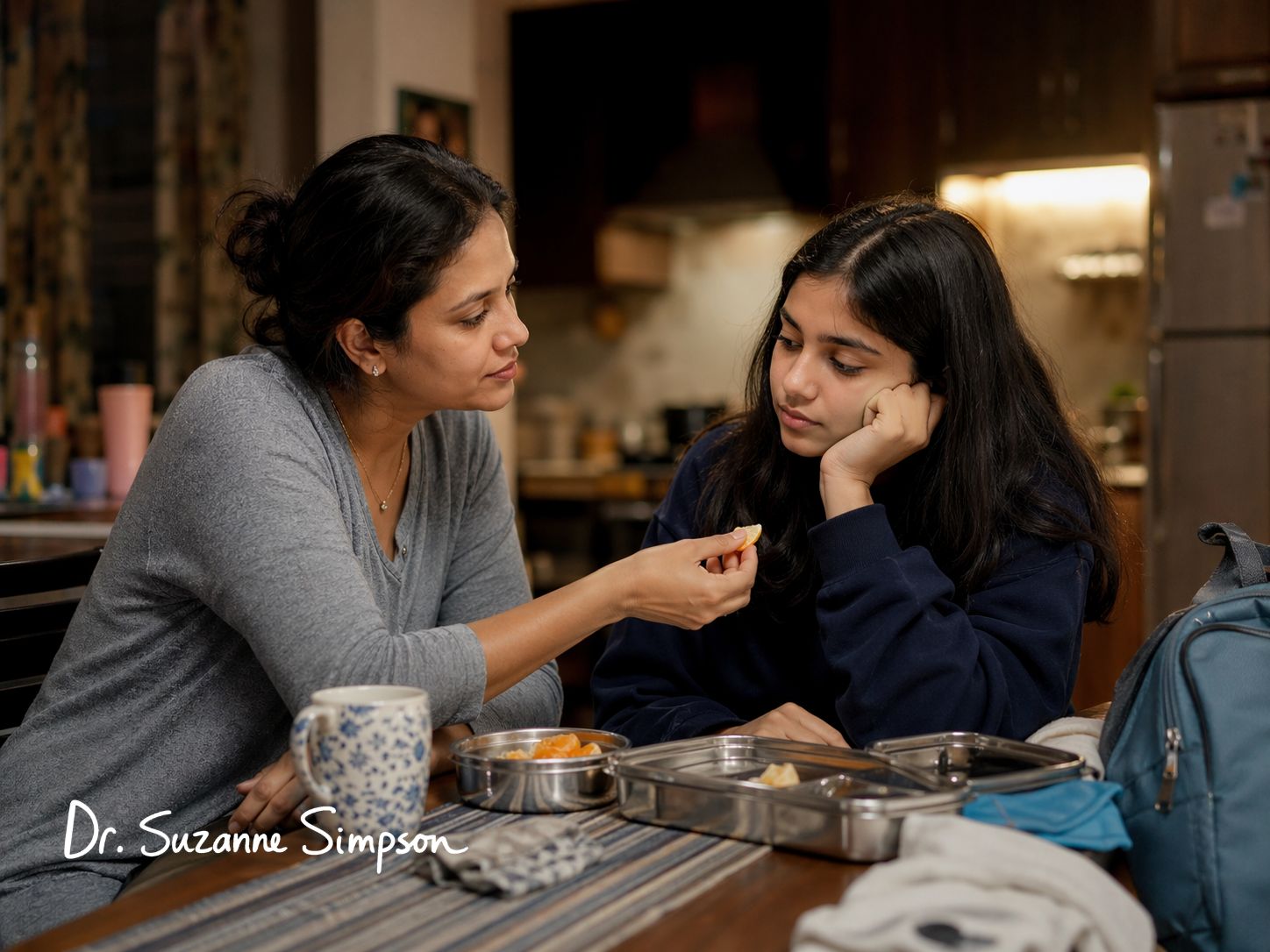
It is 9 p.m. The kitchen is a mess. There are lunch containers on the counter, a half-finished project on the table, and you are trying to remember if anyone has clean socks for tomorrow.
Your teen walks in, sees your face, and their whole body shifts. They either get sharp, or they disappear.
Nothing big happened. And yet the air changes.
This is the part of parenting teens and tweens that no one really prepares you for: your teen’s mental health and your mental health are interlinked, because your nervous systems are in relationship all day long. That is not blame. That is biology, and belonging.
If you feel like you are running on fumes, and your teen is too, you are not failing. You are human in a high-demand season. The hopeful truth is this: small shifts in your own regulation can create meaningful shifts in theirs.
Why Your Teen Reacts to Your Stress Even When You Say Nothing
Teens have a radar for the emotional weather in the home. They do not always name it, but they feel it.
When you are tense, rushed, or near tears, your teen might get irritable because the room feels unsafe. They might withdraw because they do not want to add to your load. They might become “fine” because they do not trust there is space for their feelings. Or they might act like they do not care, because caring feels too vulnerable.
This is not about doing everything perfectly. It is about becoming more intentional with presence.
The small things are not small. A quiet check-in, a warm glance, a steady presence: these help a teen feel less alone and more steady. That is co-regulation in real life.
What Co-regulation Looks Like on an Ordinary Night
Co-regulation simply means one nervous system steadying another through how we show up.
Here is what it can look like on an ordinary evening. You notice you are snapping. You pause. One full breath. You soften your face. You lower your voice. You turn toward your teen, not with an agenda, but with contact. And you say something simple.
“Hey. I’m glad you’re here.”
“Want a snack?”
“Do you want company, or space?”
No speech. No lecture. No fix. Just a regulated adult offering a safe signal. That one moment can prevent a spiral. Not because the kitchen is clean, but because the relationship is steady.
My “Get on Their Turf” approach is built on this truth: connection can be created in tiny doses, and those doses add up to trust.
One Small Daily Practice That Actually Helps Your Teen
Here is one that takes less than 30 seconds.
The one-breath turn. Before you greet your teen, before you correct, before you ask about homework: take one full breath. Then turn toward them and say their name with warmth.
It sounds simple, because it is. And it works because it communicates: you matter, I see you, you are safe with me.
If your teen shrugs, rolls their eyes, or acts unimpressed, do not interpret that as failure. Teens often accept love quietly. It still nourishes them. Consistency builds safety.
How to Talk Honestly About Your Hard Days Without Burdening Your Teen
Many parents either pretend everything is fine, or they share too much and the teen ends up feeling responsible. There is a third way: honest, contained, and reassuring.
Name it briefly: “I’ve had a hard day.” “My stress is a bit high today.”
Contain it: “This is mine to manage.” “I’m taking care of it.”
Reassure the relationship: “You don’t need to fix me.” “If I seem a bit quiet, it’s not about you.”
One sentence I love: “I’m not at my best tonight, and I’m still here with you.”
That kind of honesty builds trust. It teaches your teen that feelings can be real without becoming dangerous.
When to Widen the Circle
Sometimes the most loving thing you can do is stop trying to carry everything inside the family.
Consider bringing in more support if: you are persistently overwhelmed or on edge, conflict at home is increasing and recovery is getting harder, your teen’s functioning is dropping, or you feel like you are walking on eggshells most days.
Involving a counsellor, therapist, doctor, or school support person is not a sign of failure. It is a sign of leadership.
If your teen is struggling at school, it can also help to bring the school into the circle early, before things become a crisis. You can say: “We’re seeing stress at home. Can we work as a team to reduce pressure while we stabilise?”
Your home does not have to be calm to be safe. Your teen does not need a perfect parent. They need a parent who repairs, returns, and keeps showing up.
Visit drsuzannesimpson.com to download my free guide “8 Ways to Get On Your Kids’ Turf.”
Disclaimer: The contents of this blog are for educational purposes only and are not a substitute for professional advice, diagnosis, or treatment. My scope of practice is as an educator. Testimonials of lived experiences are opinion only and have not been scientifically evaluated.
Walking with you to get on their turf, Dr. Suzanne Simpson