
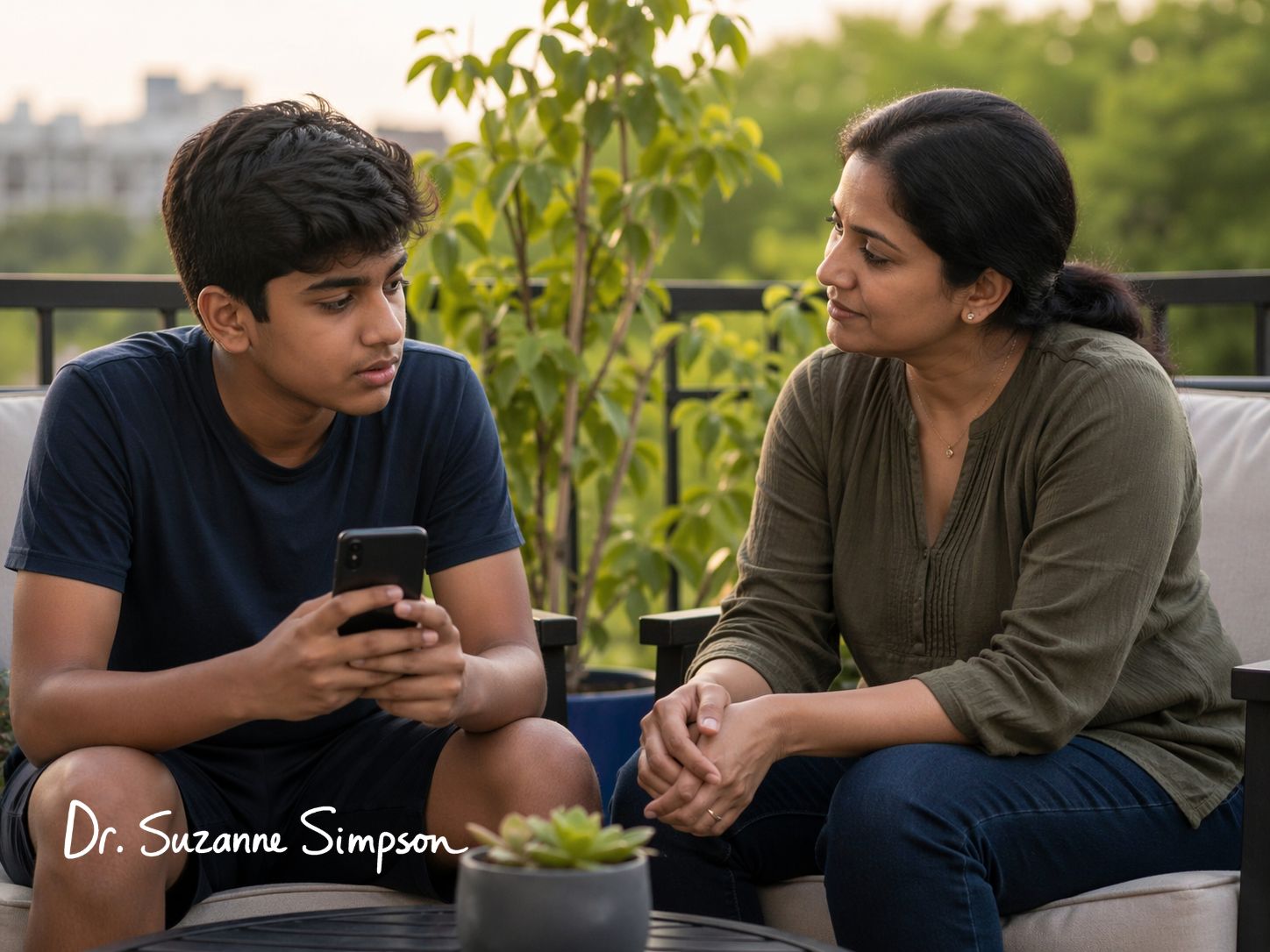
You’re standing in the kitchen, half cleaning, half listening, when your teen laughs at something on their phone.
It’s not a normal laugh. It’s sharper. Almost stunned.
You ask, “What’s funny?” They pause, tilt the screen away, and say, “Nothing. It’s dumb.”
And your gut does that familiar thing: something’s going on.
Governments and child-safety organisations are actively encouraging parents to ask kids what they are seeing online, rather than assuming. The message is simple: you will not know until you ask.
Here’s the hopeful frame I want you to hold: you do not need to scare your teen to keep them safe. You need to stay connected enough that they will tell you the truth.
In my work with teens, the pattern is consistent: when they feel judged or punished, they hide. When they feel supported and understood, they open up in small layers.
Why Teens Don’t Tell You
When a teen has been exposed to harmful online content, they may not talk because they worry you’ll take their phone away, they feel embarrassed or ashamed, they think you’ll overreact, they don’t want to look naive, or they’re not sure what it means but it stuck in their mind.
Your calm matters here. A steady adult can keep a teen’s nervous system from spiking into shutdown or defensiveness. This is where connection-centred parenting protects teen mental health in real time.
Five Questions That Open the Door
These questions work because they are curious, not accusatory. Try them side-by-side: in the car, while walking, doing dishes, or grabbing food.
“What’s the weirdest thing you’ve seen online lately?” Simple, normalising, low pressure.
“What kind of content makes you feel worse after you watch it?” Helps them build self-awareness, not fear.
“Have you ever seen something that you couldn’t unsee?” Gently names the reality without blaming.
“What’s going around at school online right now, any challenges, drama, or intense videos?” Keeps it about their world, not a confession.
“If something online made you uncomfortable, who would you tell first?” A safety question disguised as a trust question.
If they say nothing or shrug, stay steady: “Okay. I’m not here to interrogate you. I just want you to know I’m safe to talk to.”
The goal is not to get everything today. It’s to keep the door open for tomorrow.
The Moment They Show You Something Worrying
This is the moment where many parents accidentally teach kids to hide. If you gasp, panic, lecture, or grab the phone, your teen’s brain learns: I can’t bring you hard things.
Here is a three-step response that protects connection and safety.
Step 1: Regulate your face and voice first. Even if you’re shocked, try: “Thank you for showing me. That took courage.”
Step 2: Name the impact, not the judgement. Instead of “That’s disgusting, what were you doing?” try: “That’s intense. How did it land for you?” or “Did it scare you, disgust you, pull you in, or all of it?”
Step 3: Move into teamwork. “Let’s figure out what to do next, together.” “Do you want me to just listen first, or do you want help making a plan?”
One guiding sentence: “I can handle the truth, and I won’t punish you for bringing it to me.”
Make a Safety Plan With Your Teen, Not for Them
A safety plan is a shared agreement that says: we are a team.
Identify risky zones. What kind of content tends to pull people in? Where does it show up, TikTok, Instagram, YouTube, Discord, group chats?
Decide on early exit moves. Help them choose two or three actions they can do fast: close the app, hit “not interested,” block the account, report the content, or send you a screenshot and then delete it.
Decide who to tell. Make a short list: a parent, a trusted adult, a school counsellor. Then ask: “If you can’t talk, could you text me a code word?”
Agree on what happens when they tell you. “If you tell me you saw something harmful, my first job is to stay calm and help you feel safe. We will problem-solve together. We won’t go straight to punishment.”
Revisit monthly, not once. Algorithms change. Trends change. Your plan should too.
The best protection you can offer is not a perfect filter. It is a relationship where your teen can say, “I saw something and it messed with me,” and know you will respond with steadiness.
For more practical tools to connect with your teen and protect their mental health online, visit drsuzannesimpson.com.
Disclaimer: The contents of this blog are for educational purposes only and are not a substitute for professional advice, diagnosis, or treatment. My scope of practice is as an educator. Testimonials of lived experiences are opinion only and have not been scientifically evaluated.
Walking with you to get on their turf, Dr. Suzanne Simpson